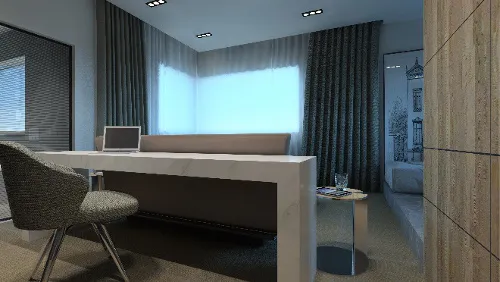
Envisioneer Express is a view and markup tool for Envisioneer models. When you first download the product it will give you 30 days to test drive the full design product and then it will revert to the viewer only tool.
As a viewer you can open a .bld file and view it in 2D and 3D. Move the furniture, change the materials, add notes to the plan. Upload to the VR app for the ultimate experience.
Or try our new tool!
Personal Architect is a cloud-based home design tool that is fast and easy to use. It is the universal software for all your home design and modeling needs, providing an exceptional renovation experience from start to finish.
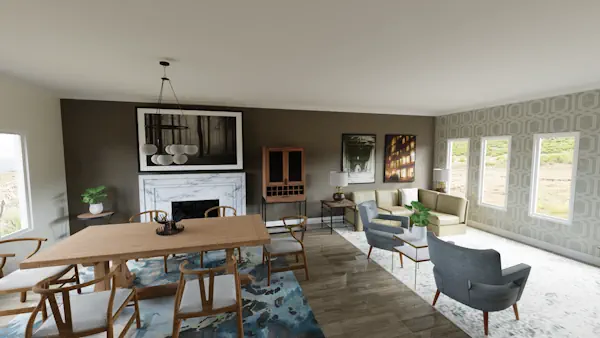
Open Envisioneer models or the samples that install with Envisioneer Express. Pick new colors and materials, move furniture on the fly to try out endless possibilities. A home design viewer that is easy to use and fun!
Get a complete view of what your design will look like in 2D and 3D! Create stunning photo realistic images to share or upload to a VR environment! This state of the art home design viewer lets you visualize your designs with real shadows, reflections, seasons and times of day. See our gallery for examples.
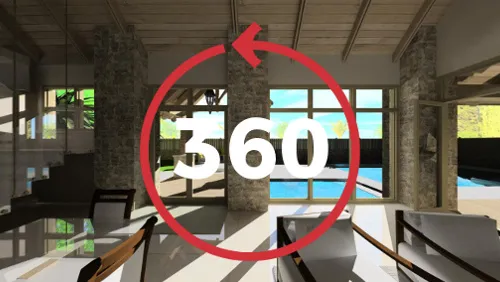
View GalleryVirtually walk through the model and share it by uploading your model to the free Envisioneer VR app for virtual tours! This innovative tool is the ultimate home design software.
The alignment problem—ensuring AI acts in accordance with human values—is exacerbated by the opacity of DNNs. The Reflective Architecture offers a partial solution: .
Madewithreflect4: Transforming Personal Knowledge into a Digital Brain madewithreflect4
The trajectory of artificial intelligence has shifted from static symbolic logic to dynamic, probabilistic modeling. However, the "black box" nature of Deep Neural Networks (DNNs) presents an epistemic gap between computation and explicable reasoning. This paper introduces the concept of , a paradigm wherein a model iteratively critiques, refines, and validates its own outputs prior to finalization. By analyzing the feedback loops inherent in Chain-of-Thought (CoT) prompting and comparing them against "Reflective" synthesis methodologies, we argue that recursive introspection is not merely a prompt-engineering trick, but a fundamental step towards Artificial General Intelligence (AGI). We demonstrate that models utilizing reflective recursion exhibit higher fidelity in logic preservation, reduced hallucination rates, and a nascent form of "synthetic metacognition." The alignment problem—ensuring AI acts in accordance with
The Reflective Architecture introduces a latency period between generation and output. We define this as the : However, the "black box" nature of Deep Neural
The alignment problem—ensuring AI acts in accordance with human values—is exacerbated by the opacity of DNNs. The Reflective Architecture offers a partial solution: .
Madewithreflect4: Transforming Personal Knowledge into a Digital Brain
The trajectory of artificial intelligence has shifted from static symbolic logic to dynamic, probabilistic modeling. However, the "black box" nature of Deep Neural Networks (DNNs) presents an epistemic gap between computation and explicable reasoning. This paper introduces the concept of , a paradigm wherein a model iteratively critiques, refines, and validates its own outputs prior to finalization. By analyzing the feedback loops inherent in Chain-of-Thought (CoT) prompting and comparing them against "Reflective" synthesis methodologies, we argue that recursive introspection is not merely a prompt-engineering trick, but a fundamental step towards Artificial General Intelligence (AGI). We demonstrate that models utilizing reflective recursion exhibit higher fidelity in logic preservation, reduced hallucination rates, and a nascent form of "synthetic metacognition."
The Reflective Architecture introduces a latency period between generation and output. We define this as the :